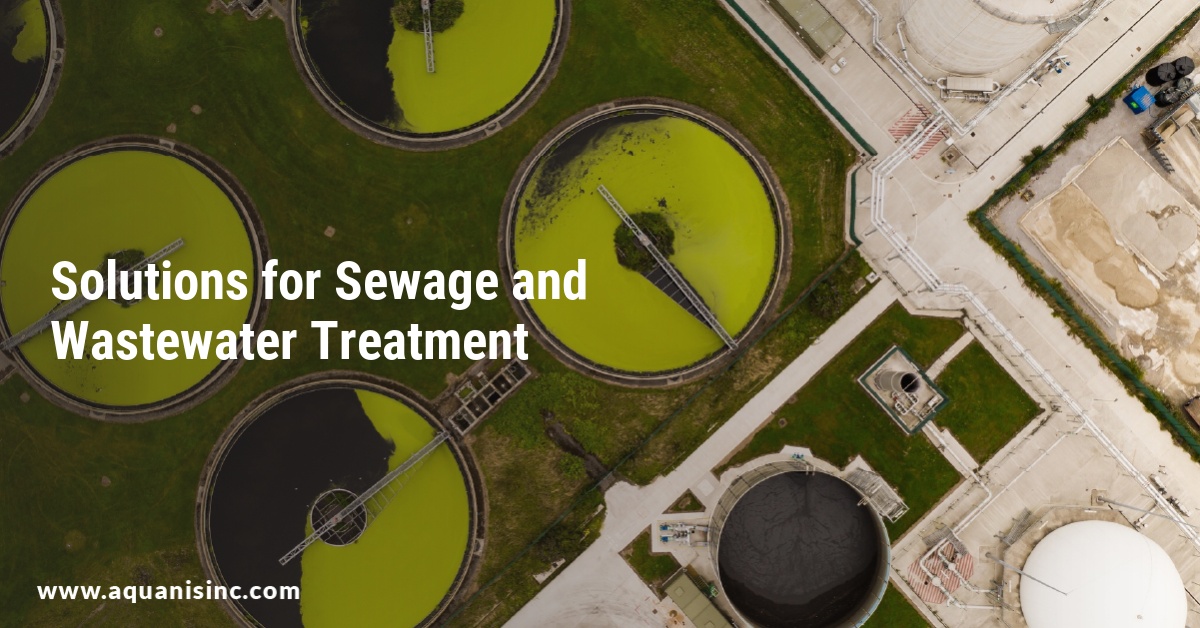
Solutions For Sewage and Wastewater Treatment
If you have been looking into solutions for sewage and wastewater treatment, you have come to the right place. There are many different ways to treat the waste from your home or business, including repairing a leak or other defect, installing filters, and recycling and reusing the waste. By learning more about each of these, you will find that you can find the right solution for your situation.
Primary treatment
Wastewater treatment systems are designed to remove harmful substances from the water. The primary goal of wastewater treatment is to minimize damage to the environment and protect human health. In order to achieve this, the processes used vary. These include conventional, advanced, and tertiary processes.
The conventional process consists of a series of physical and chemical processes. These remove organic materials, including nitrogen, phosphorus, and suspended solids. This type of process is commonly used in industrialized countries. It also has a lower level of pathogen removal.
A more advanced primary treatment method is usually called high-rate clarification. It uses a lamellar settler and can achieve higher effluent quality. During this process, pathogens and heavy metals are reduced.
High-rate biological treatments are able to reduce bacteria and some viruses. They can also remove some dissolved minerals. However, they do not remove all the non-biodegradable solids.
Aerobic biological treatment is a process in which aerobic microorganisms feed on sludge for 10-20 days. These organisms produce a number of inorganic end-products, including CO2, NH3, and H2O.
Filtration
Filtration for sewage and wastewater treatment involves the removal of solids and particles from water. These processes can be biological, chemical or physical. In all cases, the objective is to remove particles from the water.
In the case of membrane filtration, the filter membrane has a microporous separating layer. The pores range from 0.01 to 0.02 mm. This is a relatively fine pore size that is effective at removing viruses and bacteria.
Depending on the type of filtration and the number of particles that are being removed, the depth of the filter can vary. Normally, a 24-inch to 36-inch filter is standard.
Other forms of filtration can include ultrafiltration and surface capture. Ultrafiltration refers to a filter membrane with very small pores. Only the most minute of contaminants are allowed through.
Surface capture is a type of filtration that includes sedimentation and flocculation. These processes take place in the first 6 to 12 inches of the filter surface.
Repairing a leak or other defect
A sewer pipe can break and you’ll need to shell out some cash for the repair. It’s a good idea to get your system inspected on a regular basis. Taking the time to look for obvious defects will reduce the specter of future failure.
The best suited to the task is a qualified professional. The best bets are a local plumbing company and an experienced contractor. Getting your system in top condition will save you money in the long run. This is particularly true if your septic system is in need of an overhaul. Your system should be inspected annually to catch any early problems. If you don’t have a professional on call, a trip to the hardware store may be in order.
Getting the most from your system will require some serious planning. For example, the optimal time of day to perform a sludge removal isn’t always clear cut. It’s also a good idea to avoid using the wrong equipment, such as a high pressure water pump.
Recycling and reuse
Recycling and reuse as solutions for wastewater and sewage treatment have several advantages. They can enhance sustainability, resilience and water security. It is also an effective way to limit pollution discharges into the environment.
Recycled and reused water can be used in industry and agriculture, street cleaning, geothermal energy production, fire-fighting, commercial laundering and other processes. However, reuse of water can be seen as controversial, especially in religious and cultural settings.
Recycling and reuse as solutions for wastewater and sewer treatment is not only environmentally beneficial, but can also generate synergies between public and private sectors. Moreover, wastewater reuse can support the Sustainable Development Goals.
Some cities are experimenting with a variety of ways to treat sewage less like waste. They include using a filtration system and sending the water to a reservoir or groundwater aquifer. Other cities are incorporating recycled water into their municipal water supply.
Recycled water can be a significant source of clean, safe drinking water. But it can be challenging to find reliable and sustainable sources of freshwater.

Matthew Reilly, a marine biologist and environmental writer, combines his passion for research with a mission to educate the public on water conservation. With over a decade of field experience, Matthew brings a wealth of knowledge and a unique perspective to the pressing issues of water pollution and ecosystem preservation.